Crawl Path SEO: Footer, Breadcrumbs & HTML Sitemaps for Events
27/10/2025
Contributor Pack Templates for Events | Speaker Bio, Session & Article Guide
14/11/2025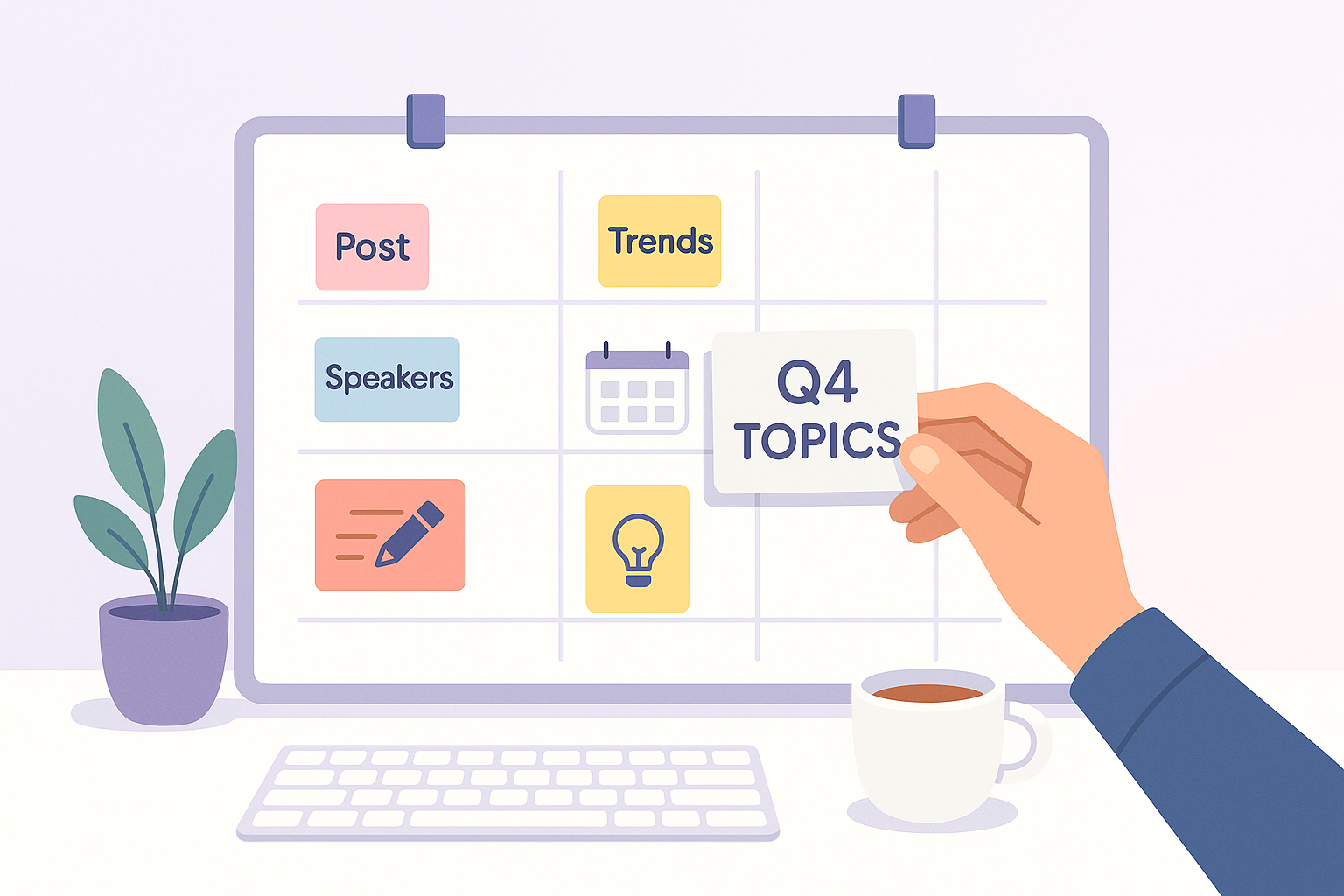
How to Build a 12 Month Blog Plan for Your Event Website
Short bursts of content don’t build discoverability. A steady rhythm of relevant posts does, and you don’t need 52 weeks of ideas to get there.
Why One Off Blogging Doesn’t Work
If you only post when there’s “something to say” your blog won’t deliver much. That’s because most event content is built around campaign timelines, not content systems. One month it’s packed with updates, the next it’s empty.
But here’s the thing: traffic doesn’t follow your campaign calendar, it follows search behaviour.
That means people are searching for your event’s themes, speakers, and industry questions all year round. And if your blog isn’t showing up when they look, someone else’s will.
As Arjun Basu put it:
“Without strategy, content is just stuff, and the world has enough stuff..”
Quick Win:
The 3 Season Model for Blog Planning
To keep things manageable, think of your blog plan in three content seasons. This content roadmap ensures clarity in your editorial calendar and helps prioritise content creation.
1. Build Up (3–6 months before)
Examples:
- “Top Trends in [Your Industry] for 2026”
- “Why [Topic] Will Be a Hot Focus at This Year’s Event”
- “Meet the Exhibitors: Early Highlights”
2. Live Coverage (during the event)
Examples:
- “Day One Highlights”
- “Best Product Launches on the Show Floor”
- “Top Quotes from Today’s Speakers”
3. Echo (2–6 months after)
Start with your event themes, subtopics, and personas. Then build blog content around those intersections, guided by keyword research, search volume, and performance tracking.
For example, if your event focuses on retail tech, your content types might include:
- AI in Retail: “How AI Will Reshape Customer Experience in 2026”
- Sustainability: “Green Retail Trends Every Buyer Should Watch”
- Future Skills: “The Talent Gap in Retail Innovation: What You Need to Know”
These don’t just work for SEO, they serve attendees and sponsors too. Great content builds pre qualified interest, not just impressions. You can also adapt blog content into various content formats such as email newsletters, infographics, or speaker highlight reels.
Sample Calendar: One Year of Smart Posts
Here’s a lightweight framework to get you started. Adjust for your event size, seasonality, and team capacity. Think of it as your content marketing calendar or publishing schedule.
| Month | Focus | Example Blog Topics |
|---|---|---|
| Jan–Mar | Echo Content | “Top Trends from Our 2025 Keynotes”“Best Questions from the Floor” |
| Apr–Jun | Build Up | “Sneak Peek at Our 2026 Speaker Lineup”“What to Expect at This Year’s Show” |
| Jul–Aug | Build Up | “Why [Topic] Will Be Huge in 2026”“Early Exhibitor Highlights” |
| Sept | Build Up | “Your Ultimate Visitor Guide to [Event]” |
| Oct | Live Coverage | “Day 1 Recap”“Top Quotes from the Keynote Stage” |
| Nov–Dec | Echo | “What We Learned This Year”“What We’re Planning for 2026” |
Quick Win:
Contributor Strategies and AI Support
You don’t need to write every word yourself. In fact, you shouldn’t.
Here’s how to scale your content pipeline without burning out:
- Use a Contributor Pack: Give speakers and sponsors a simple template to share insights
- Repurpose Everything: Turn transcripts, Q&A panels, and LinkedIn posts into blog drafts
- Use AI Drafting: Tools like ChatGPT can help generate outlines or summaries
- Batch Writing: Draft multiple posts in one sitting to stay ahead of schedule
- Assign a Content Owner: Ensure someone is accountable for managing each topic’s workflow creation and content review
Support this with a clear content plan and Publish Plan so everyone knows what’s going live and when. This ensures timely blog delivery and fuels both email marketing and social media campaigns.
And remember, not everything needs to be longform. A 400-word highlight with a strong call to action can still rank, especially for niche topics.
As Alex Rynne advises:
Avoid producing random acts of content. Your content should be intentional and map back to business objectives.
Tip
Final Thought: Plan First, Then Optimise
Most event teams jump straight to production. But the secret to year round visibility is planning, not perfection.
Map your blog content strategy now, while you’re not in campaign mode. Pick your top 5 themes. Slot them into your editorial calendar. Assign contributors. Add reminders.
Then, when the busy season hits, you’ll already be ahead, and so will your content.
This is especially powerful for online events, where pre and post event visibility are crucial. Blog posts become the bridge between sessions, social media, and email newsletters.
As David Beebe puts it:
Content marketing is like a first date. If all you do is talk about yourself, there won’t be a second date. You don’t need a post every week. You just need the right ones, at the right time
Bonus
Further Reading
- 80 Content Marketing Quotes from Top Marketers – Ideal inspiration for messaging and planning mindset
- 10 Inspiring Expert Quotes That Honour Timeless Content Marketing – Great to share with your team or stakeholders
References
Latest Posts on Website Optimisation & AI

Website optimisations and AI content direct to your inbox
You can unsubscribe any time. I won’t share your email.